

Why Tummy Time Matters
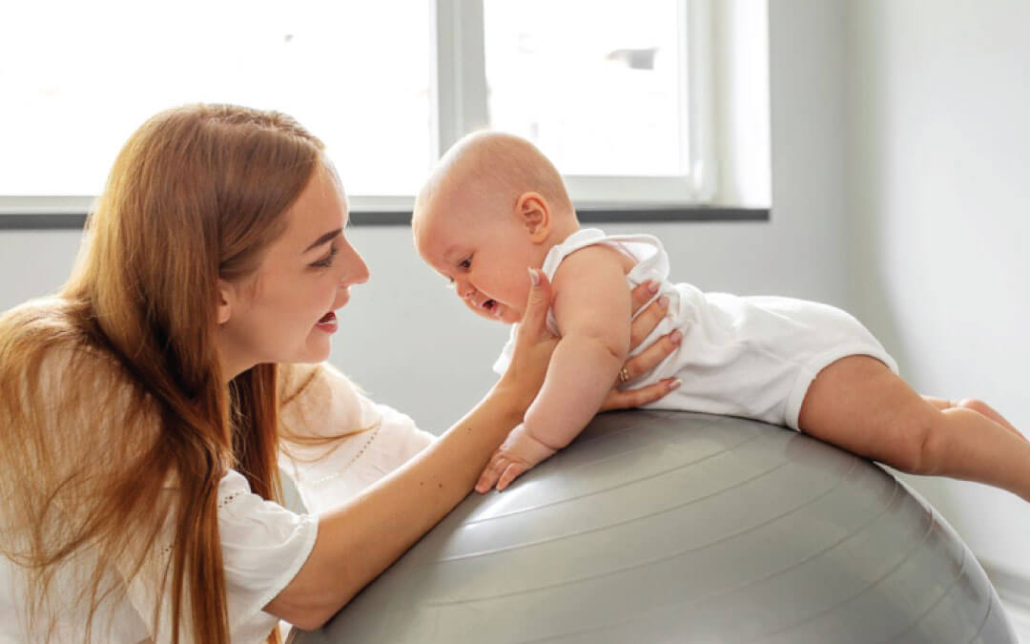
Why Tummy Time Matters: Supporting your baby’s developing spine & brain.
When you have a newborn baby, there is an overwhelming amount of advice about what you should and shouldn’t be doing with them. One recommendation that can sometimes seem surprisingly simple, but very effective & beneficial in the long run, is tummy time.
Tummy time is simply supervised time when your baby is awake and placed on their tummy. Despite it’s simple nature, these small periods of movement and exploration provide an essential foundation for your baby’s physical and neurological development.
Tummy time & the developing brain.
One of the most important and interesting aspects of development in your baby, is the relationship between movement and brain development.
A baby’s brain doesn’t develop in isolation, it’s a combination of trillions of pieces of information that the brain receives from the body and the environment constantly throughout the day, and movement is one of the biggest driving factors.
When your baby lifts their head, looks toward an auditory stimulus, reaches for a toy or shifts their weight, they are receiving information from their muscles, joints, skin, eyes, ears and so on. Their nervous system then collects those bits of information, sends them to their brain, to then coordinate an appropriate response.
To put it simply, movement helps to drive brain development. Tummy time broadens your baby’s movement capabilities.
Research suggests that new motor skills help to create new opportunities for exploration, perception, learning and interaction with the surrounding environment. In other words, as babies learn to move, they gain new ways of learning about the world around them.
There is also emerging research in a 2024 study, that the more advanced your baby is when doing tummy time, the higher their ability to solve movement problems.
Essentially meaning, tummy time gives the developing nervous system valuable opportunities to integrate movement & sensory information.
Tummy time & your baby’s developing spine.
A newborn’s spine and musculoskeletal system undergo enormous changes during the first year of life. From rolling to sitting to standing and then walking, tummy time is the foundation of this.
Rather than thinking of tummy time as simply an exercise to help develop the neck, it is more useful to think of it as an opportunity for your baby to experience movement against gravity.
When a baby lies on their tummy, they gradually learn to lift and turn their head, push through their arms, shift their weight and eventually reach for objects. All of which, require coordination between muscles of the neck, shoulders, trunk and pelvis.
Over time, these learnt habits, contribute to the development of postural control and strength needed for later milestones, such as rolling, sitting, crawling and eventually standing and walking.
Like we as adults would strengthen muscles in the gym, think of tummy time as a regular gym session for your baby’s brain. Less about actually building muscle and more related to creating appropriate motor control & coordination through the connection between the brain and the body.

Tummy time & head control and the prevention of flat spots.
One of the earliest challenges for a newborn is learning to control their head. A newborn has a relatively large hard in comparison to the rest of their body.
This presents with a limited ability to actively control their head initially.
Tummy time gives babies an opportunity to gradually practise lifting, turning and stabilising their head & as they become stronger, progression is often seen from lifting their head to supporting themselves with their forearms, to then reaching for toys.
These aren’t isolated movements. They are the building blocks for increasingly complex movement.
Another benefit of tummy time is that it provides babies sufficient time without pressure on the back of their head.
Because of poor head movement, lack of head control and time spent sleeping on their backs, some babies can develop positional flattening of the skull, also known as plagiocephaly.
Tummy time reduces the amount of time your baby’s head is resting against a surface and encourages them to develop the ability to move their head in different directions, to help prevent flat spots.
A 2020 systematic review found a positive association between tummy time and the prevention of plagiocephaly.
Small amounts add up.
For a newborn, even a few minutes at a time can be valuable.
As your baby gets stronger, these shorter periods can gradually become longer. Australian recommendations suggest accumulating at least 30 minutes of tummy time throughout the day, for babies who aren’t yet mobile.
Think less about one long tummy time session and more about incorporating movement into every day life.
Tummy time isn’t about trying to make your baby hit developmental milestones faster than they should.
It’s about giving your baby’s developing body and nervous system opportunities to move, adapt, explore and learn.
For something as simple as allowing your baby to spend some supervised time on their tummy each day, the potential developmental benefits make it an incredibly worthwhile and essential part of early life.
Yours in health,
Dr Bailey Yelland | Chiropractor
Research.
- Tummy Time and Infant Health Outcomes: A Systematic Review 2020.
- Guideline on Physical Activity, Sedentry Behaviour & Sleep for Children under 5 years of age.
- Recommendations for infants, toddlers and preschoolers (birth to 5 years).
- Relationship between Prone Skills and Motor-Based Problem-Solving Abilities in Full-Term and Preterm Infants During the first 6 Months of life 2024.
- Correlates of tummy time in infants aged 0-12 months old: A systematic review 2017.
- Deformational Plagiocephaly in normal infants: A systematic review of causes & hypotheses 2017.


